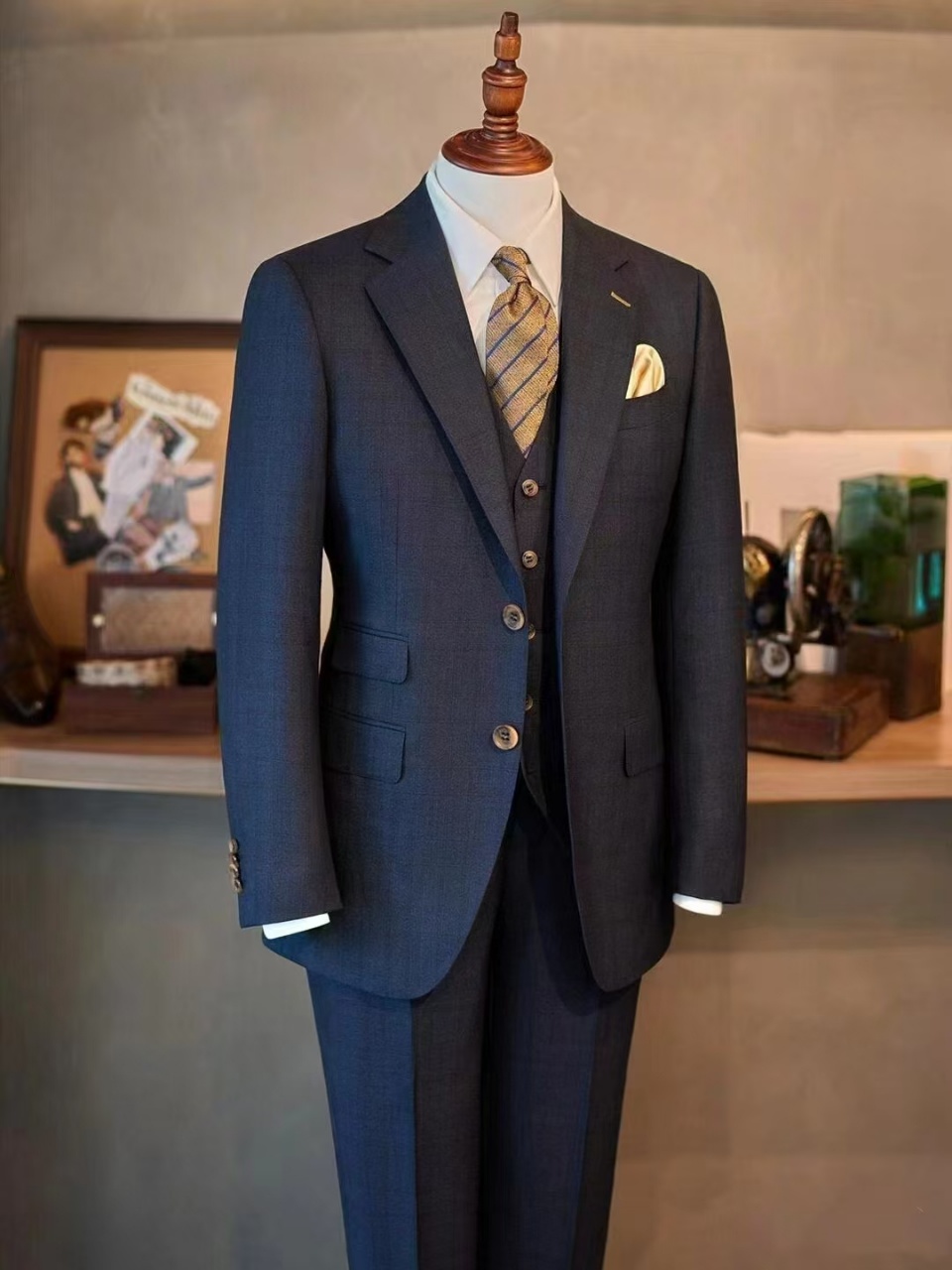
The '7-Second Rule' of Workplace Dressing
Harvard Business School research shows that people form an impression within the first 7 seconds of meeting, and attire accounts for over 55% of that impression. In the workplace, a well-fitted suit is not just about 'looking good' — it's a visual expression of professionalism and reliability.
But workplace suits tend to fall into two extremes: either too casual (meeting clients in a hoodie and chinos) or trying too hard (wearing cufflinks to the office like you're attending an awards ceremony). The essence of a workplace suit is 'appropriateness' — just slightly more formal than those around you, nothing more, nothing less.
Shirt, Tie & Shoe Coordination Rules
Shirt selection: White is the workplace foundation — keep 3–4 in rotation. The next step up: light blue and fine-stripe shirts — a touch more personality than pure white, but still well within the 'safe zone.' For collar types, we recommend spread collar or Windsor collar — the two most versatile.
Tie coordination: Tie width should match the lapel width. For color, navy and burgundy are the safest workplace choices. For patterns, fine stripes or pin dots — detailed without being flashy. Avoid: cartoon ties, fluorescent ties, and ties wider than 9cm (the 'boss tie').
Shoes and belt: Colors must match — black belt with black shoes, brown belt with brown shoes. This is the iron rule of suit wearing. Shoes: Oxfords (most formal) or Derbies (slightly more casual). Loafers are fine for Casual Friday.
Dress Codes for Different Meeting Levels
Internal team meeting: Jacket can hang on your chair — shirt + trousers are enough, tie optional.
Client visit: Full suit + tie is mandatory. The first impression you make sets the tone for the negotiation.
Board / senior presentation: 3-piece suit (jacket + waistcoat + trousers) + French cuff shirt. This is the highest workplace dress standard — it expresses full respect for the occasion.