Why Reflective Workwear Is a Safety Baseline
In low-visibility environments — at night, in tunnels, or during rain and fog — the probability of accidents between workers and vehicles rises significantly. Wearing standards-compliant high-visibility reflective workwear allows drivers to clearly detect workers from 300 meters away, buying critical reaction time. This is not a nice-to-have — it's a fundamental safety guarantee.
National Standard Explained
GB 20653 'Occupational High-Visibility Warning Clothing' is China's mandatory standard for reflective workwear, with explicit requirements for reflective material brightness (retroreflection coefficient ≥330 cd/(lx·m²)), reflective strip width (≥50mm), fluorescent background area, etc. We recommend requesting suppliers to provide test reports demonstrating GB 20653 compliance, and specifying fabric and reflective strip parameters in the contract. Some industries (highway maintenance, electrical power construction) have even stricter industry-specific standards requiring separate confirmation.
Reflective Strip Layout & Fabric Options
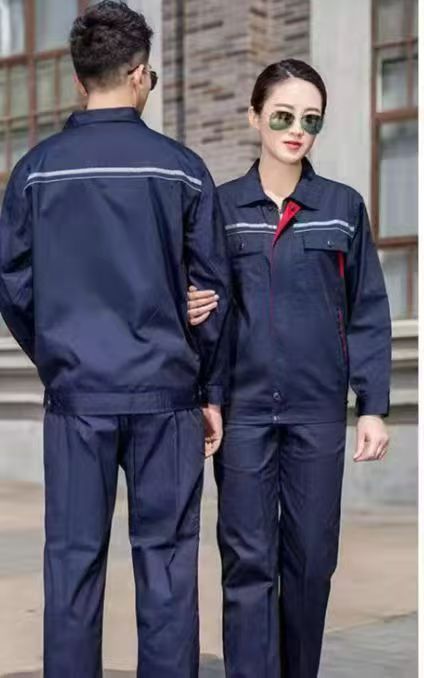
Standard 360° full-coverage reflective layout: Two vertical reflective strips on the chest + H-type and X-type reflective strips on the back + ring reflective strips on both arms. This ensures workers are visible from any approach angle at the earliest possible moment. Fabric recommendation: waterproof breathable composite fabric — outer waterproof coating repels water, inner breathable mesh design wicks sweat without stuffiness. Color preference: fluorescent yellow (highest daytime visibility) or fluorescent orange (international warning color convention, recommended for highway scenarios). Winter models recommend cotton-padded lining for cold protection without compromising safety.